
By Will May
On Saturday, Nov. 7, Charlotte community members came together at the Independent Picture House to discuss an important topic: the growing housing insecurity crisis. It was the final event of the year for the Community Impact Film Series, a free program that pairs films with discussions and community resources. At this screening, nonprofit leaders and city representatives met with film enthusiasts to share their experiences with efforts to end homelessness.
“We wanted to be a service to the community,” said Rodney Stringfellow, director of film studies at UNC Charlotte, an IPH board member and the panel’s moderator. “We wanted to have events that centered around film, but also used film as a bridge to address important issues with the community.”
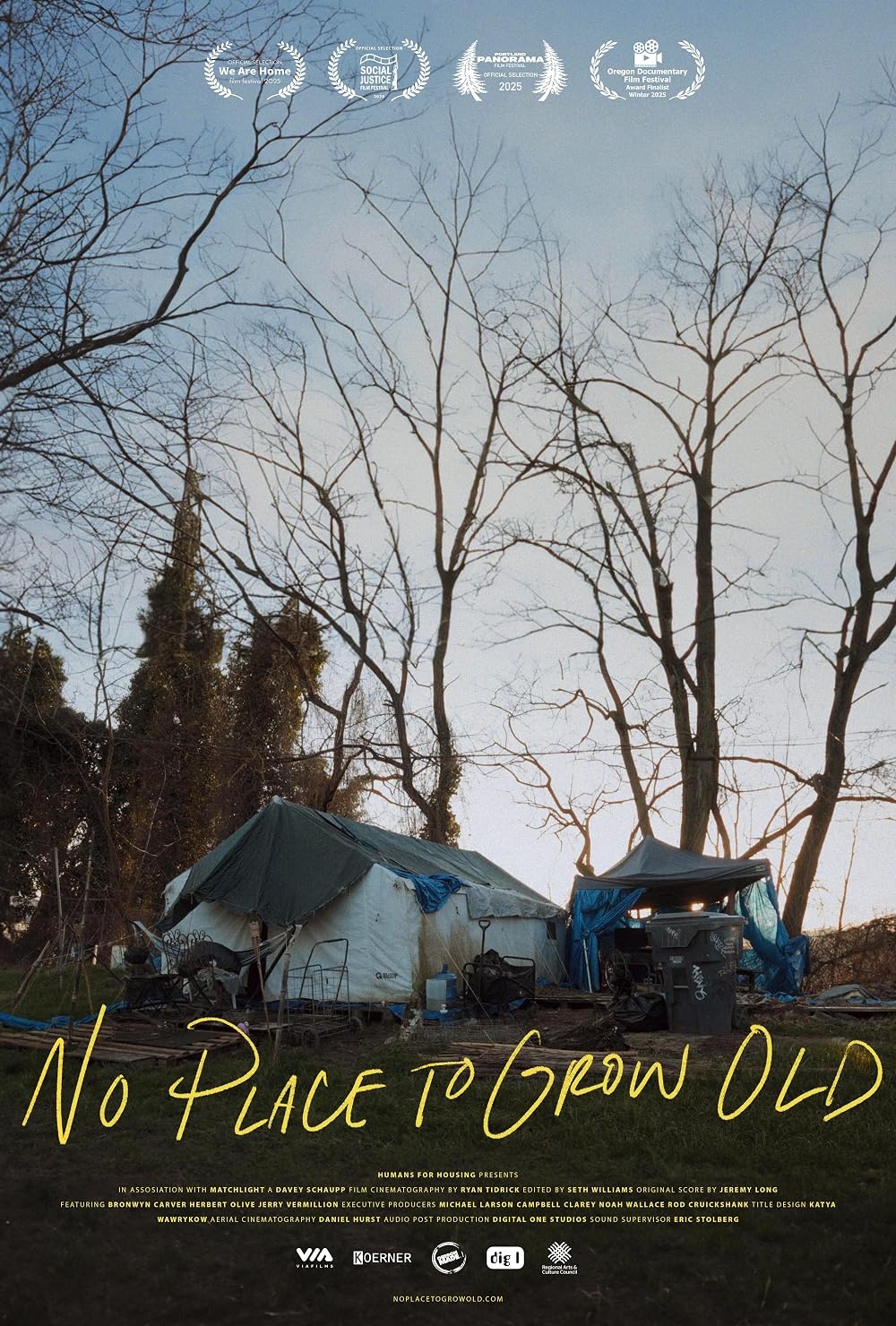
The event centered on a screening of the 2024 documentary NO PLACE TO GROW OLD, directed by Davey Schaupp. Set in Portland, Oregon, the film focuses on an under-discussed segment of the American homeless population: the growing number of homeless adults 55 and older. Through intimate interviews, unhoused Portland residents tell their stories as they persevere through a hardship that is especially difficult at an age when many people consider retirement. The film also features insight from experts who put the rising number of older homeless adults in context amid the nationwide housing and affordability crises.
After the screening, nonprofit and community leaders took part in a panel discussion and Q&A session moderated by Stringfellow. Darren Meadows of Project Outpour discussed his organization’s work providing showers, clean clothes and other vital resources to unhoused neighbors. Shakieta Maloye, founder of Another Chance: House of Refuge Inc., described her nonprofit’s focus on transitional housing for men, rental subsidy assistance and wraparound support services. Karen Pelletier, director of housing innovation and stabilization services with Mecklenburg County, explained her role in creating housing opportunities and partnering with local agencies. Mary Ann Priester of the North Carolina Coalition to End Homelessness spoke about her experience overseeing funding and advocacy for homeless services.
The discussion covered topics such as the impact of rising prices, common stigmas and attitudes toward homelessness, and the effects of police sweeps on the community. Panelists also discussed how the number of people using their organizations’ services has grown over the years.
“We have seen a significant increase in our numbers,” Meadows said. “Last year we did 2,129 showers. We already have surpassed that with 3,172. And the year’s not over.”
The event was bookended by a resource fair, where attendees could talk with organizations and learn how they could make an impact. Among the organizations was Roof Above, a comprehensive provider of services including shelter support, day services and housing programs. The city was also represented by City of Charlotte Fair Housing, which helps ensure equal access to housing and investigates discrimination complaints.
“I consider it a three-way partnership: art institutions, nonprofit organizations and our government officials,” said de’Angelo Dia, IPH’s director of education and community engagement. “We’re trying to find meaningful and impactful ways to connect through the lens of cinema.”
The Community Impact Film Series resumes in 2027, but IPH still has many screenings on important topics, with post-film talkbacks, scheduled through the end of the year. Don’t miss the upcoming screenings of the powerful documentaries BEING HEUMANN, opening Nov. 13; ONCE UPON A TIME IN HARLEM, Nov. 20; and THE POWER OF ONE, Dec. 13.