
By Hunter Williams
 From his $6,000 feature directorial debut, FOLLOWING (1998), to the pinnacle of Hollywood with his Best Picture winner, OPPENHEIMER (2023), Christopher Nolan has maintained the same approach to filmmaking. Nolan strives to capture everything in camera by shooting on location, using actual sets and prioritizing practical effects. And always on celluloid. While his core approach to filmmaking remains unchanged, he hasn’t stopped innovating. With each film, often on a larger scale, Nolan continues to push the boundaries of what he’s able to photograph. From flipping an 18-wheeler to crashing a Boeing 747 into an airport, he consistently challenges his cast and crew to redefine what’s possible on set. Who else is strapping an IMAX camera onto a Spitfire and flying it over the beaches of Dunkirk?
 To prepare for THE ODYSSEY (2026), I’ve been revisiting all of Christopher Nolan’s work. My favorite is OPPENHEIMER. The film features zero CGI across its entire three-hour runtime. One of its grand achievements is the Trinity Test sequence. As history has written it, we already know the outcome of this event. Even with that prior knowledge, Nolan still dials up the intensity and suspense as the clock ticks down. I remember holding onto my seat for dear life. The bomb’s ignition and the sudden silence left me in awe. But I ask myself: Would I have had the same reaction if it were a digital effect? Probably not.
 By recreating the Trinity Test in camera, Nolan creates a more visceral experience. You feel a sense of danger. The flames engulf the screen. Yet it’s also a beautiful spectacle. OPPENHEIMER isn’t the only Nolan film to contain a nuclear blast. Off in the distance, we see a mushroom cloud emerge from the sea in The DARK KNIGHT RISES (2012). This was CGI. It doesn’t feel as threatening as it does in OPPENHEIMER. Don’t read this as saying CGI is bad for film. It can serve as an important tool. But when a film relies too heavily on CGI, it strips away the picture’s texture.
From a visual perspective, all of Nolan’s films still look excellent. They’ll continue to age like fine wine. Take INTERSTELLAR (2014), for example, a sci-fi epic filled with black holes and space travel. Without careful craftsmanship, the film could have already shown its age. Regardless of your opinion on the time-bending narratives in his films, Nolan’s relentless commitment to filmmaking is undeniable. He doesn’t take shortcuts. When you sit down to watch a Nolan film, you know real people dedicated to their craft helped bring his vision to life. That gives me a sense of peace in this digital age.
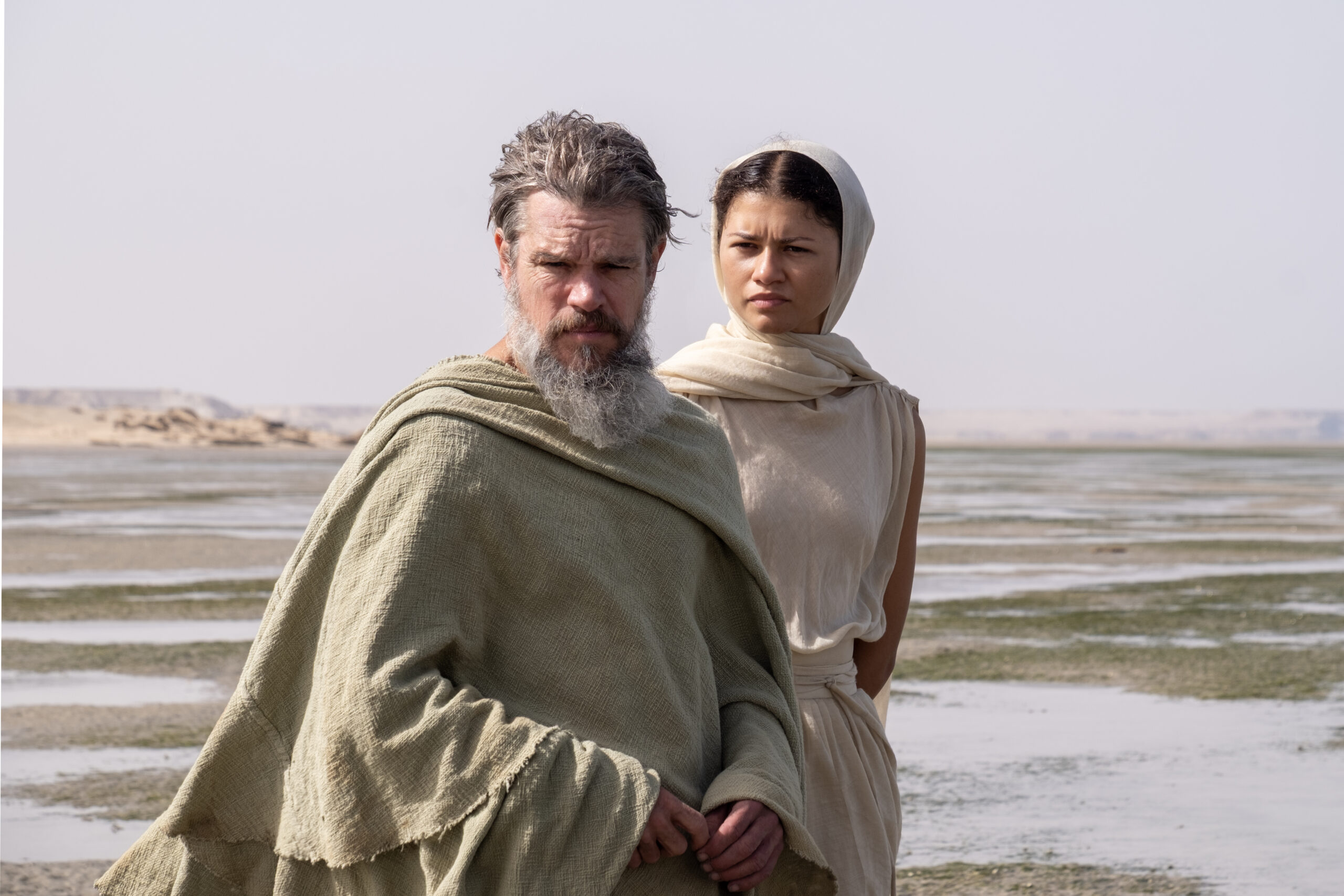
THE ODYSSEY won’t be the first time Nolan has adapted a piece of literature. As I’ve cracked open the text, I’m eager to see how he lifts Homer’s epic poem from the page to the screen. Gods and mythical creatures fill the story. With his dedication to capturing everything in camera, I wouldn’t be surprised if Nolan found an actual Cyclops to use for this film. With talent assembled on both sides of the camera, THE ODYSSEY will be a cinematic feast. Matt Damon gets his opportunity to lead a Nolan film by strapping on the sandals of Odysseus. Personally, I’m excited for Ludwig Göransson’s score to grace my ears.
 As an avid physical media collector, I can attest that the Nolan films I own look crisp on my 4K player. But that doesn’t compare with the theatrical experience. It’s second to none. Seeing Nolan’s work on the big screen is mandatory if you want to witness the full magnitude and scale of his filmmaking. If you haven’t already, defy the gods by booking a ticket for THE ODYSSEY at the Independent Picture House. I’ve even used a Polaroid to remind myself to snag one, too.