
By Sam Tucker
This February, The Independent Picture House is hosting a fantastic film series highlighting a range of perspectives within the Black experience. Through these five films, moviegoers are invited into different time periods, ages and occupations, showcasing the depth and variety of Black voices in cinema.
I had the pleasure of sitting down with the curator of this series, Dr. de’Angelo Dia, director of Education and Community Engagement at IPH. He shared many powerful insights.
Note: This is a condensed and lightly edited transcript of our phone conversation.
When you created this film lineup, was there a theme, emotion or conversation you were hoping to spotlight?
We weren’t aiming for one singular theme so much as a spectrum. Some of these films I’d never seen before — one I still haven’t.
The selections came out of a creative dialogue between me, our creative director and a member of the operations team. We were looking for five films that stretch across experiences and perspectives. These films are inviting to anyone, no matter where they are on the cultural spectrum or in their own examination of what Blackness is or isn’t.
None of these films serve as a monolith. We’re not here to designate what Blackness is. The beauty is the breadth of the human experience within Black embodiment. That was what we wanted.
So I have to ask … what’s the movie you haven’t seen yet?
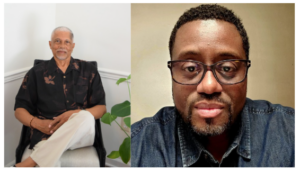 I haven’t seen UPTIGHT (1968). I’ll be moderating the conversation after the screening — though I use ‘moderating’ lightly, because the real discussion will be between Felix Curtis, who curates the Black Cinema Series for the Harvey B. Gantt Center, and Tre’ McGriff, the curator of the CineOdyssey Film Festival.
Selfishly, I’m excited just to witness two people I admire analyze the film together. Felix has screened it before, and Tre’ studied it in undergrad. I’m coming in as a spectator, and I’m grateful for that.
How did you approach choosing films that are well‑known alongside more obscure ones?
With a film like MASTER (2022), we were thinking about who’s behind the camera, who’s in front of it, and how certain films got lost during the pandemic. Our energy was pulled in so many directions, and MASTER deserved more attention.
 Much of the progress in this country has come unjustly from the labor of Black women — sometimes on their backs, sometimes on their necks. Through cinema, we can elevate that conversation. Regina Hall did outstanding work, and we knew we could curate a panel of scholars to speak meaningfully about the film.
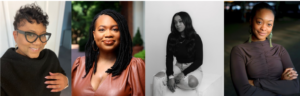
The panelist include: Dr. Portia Marie York, founder of York Creative Education Group and adjunct professor of Fiber Arts at Lenoir-Rhyne University; Tyla Barnes, director, writer and producer; and Dr. Randi Gill-Sadler, assistant professor of Africana Studies at Davidson College. The discussion will be moderated by Afeni Grace, Black Carolina Initiative director at the Harvey B. Gantt Center for African-American Arts + Culture.
For us, it was simple: This film got lost, it deserves the spotlight, and we have the voices to do it justice.
For those who are outside the Black community, what is a meaningful way to approach these films and the conversations that follow?
These films don’t suspend reality; they highlight pieces of a reality we all experience. They remind us there is still work to do and opportunities to honor the people who have been doing that work for generations.
A film like JUICE (1992) is a good example. It’s easy to reduce it to Bishop’s [Tupac Shakur] ‘righteous rage,’ but the film explores where that rage comes from and what it means to exist in a world not designed for your progress. Bishop’s emotional reality is relevant and recognizable beyond Black or brown communities.
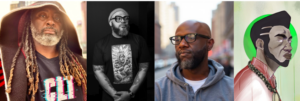 I’m especially excited for the conversation after JUICE. Three of the speakers are co‑founders of the God City, a Charlotte-based art collective — John Hairston, Jr., Marcus Kiser and Wolly McNair — joined by the poet, educator and Concrete Generation co-founder Boris “Bluz” Rogers. In our younger days, we’d have long conversations about films like this with no platform to share them.
To see four brilliant Black men talk through a film that portrays four very different versions of Black male embodiment feels full‑circle to me. It’s meaningful to help create that space. The performance response will come from Charlotte-based poet, cultural critic and GoodLit Fellow Jordan Bailey aka Young Static.
If you could add one more “fast follow” film to the series, what would it be?
There is another film that comes to mind, but I need to be careful. IPH plans to screen it and host a book club around the book-to-film adaptation, with special guests. So I won’t name it yet — but trust me, it will be exciting.
It’s been a year since you joined IPH. What has the experience been like?
I didn’t expect this — planning this series or working at IPH —but I’m grateful to be in a place that doesn’t relegate my Blackness to one month. There are films I care deeply about that aren’t in this series, but I know it’s not a matter of if they’ll be screened, but when.
My colleagues are my co‑conspirators. Our creative director recently said, ‘There’s this screenplay I think we should look at,’ and it was Amiri Baraka’s Dutchman. As a writer and as a Black man, I was embarrassed I hadn’t read it. Films like that still challenge me.
Early on, we screened THE NICKEL BOYS (2024). I’d read the book but didn’t expect to see the film and the director, who joined us virtually with his family. Being in a community like that is a gift.
Working at IPH weaves together my worlds of theology, community organizing and art. When I watch films now, I’m thinking: Where is the moral influence? Where do I see my own embodiment? How do we build post‑screening dialogue or performance responses?
One of our phrases is: It’s more than cinema. And it really is.
For those who have been to IPH, I’m sure you can echo that statement.
This February, head over to IPH, turn your phone off and enjoy a nice beverage during a month that invites you to challenge and expand how you see different communities.