
By Will May
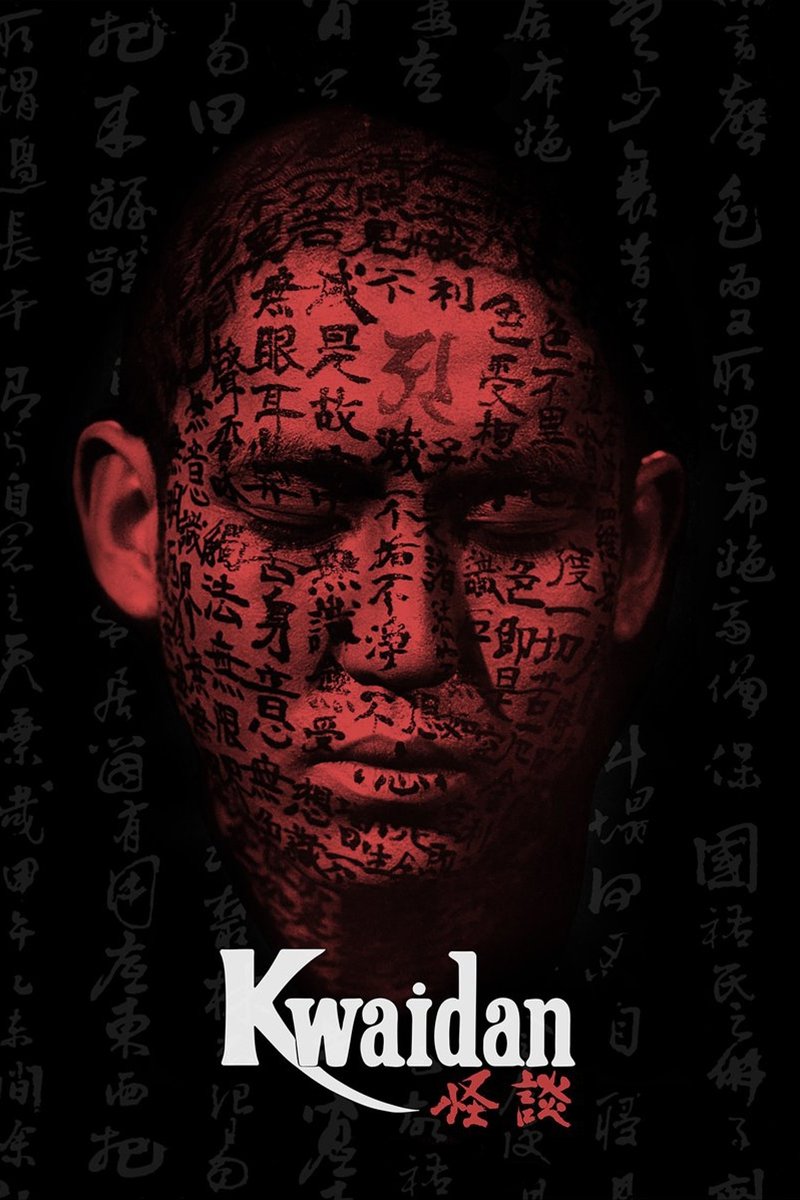
Today’s horror fanatics and casual fans alike will agree that some of the genre’s best work comes from Japan, a point reinforced by the success this year of Zach Cregger’s RESIDENT EVIL, based on the popular Japanese video game series. It’s hard to forget the string of successful franchises and Western remakes of “J-horror” films such as RING (1998) and JU-ON: THE GRUDGE (2002). However, as excellent as these films are, they pale in comparison to the haunting majesty of KWAIDAN (1964).
KWAIDAN, whose title translates to “ghost stories,” is directed by the masterful Masaki Kobayashi and contains four ghostly tales set in feudal Japan. A swordsman returns to his dilapidated home in search of the wife he abandoned in “The Black Hair,” while a woodcutter encounters a deadly spectral woman in “The Woman of the Snow.” A young blind musician is forced to perform for a clan of ghosts in “Hoichi the Earless,” and a lord’s attendant sees the face of a strange man in his teacup in the final segment, “In a Cup of Tea.” Admirers of classic Japanese cinema will probably recognize many of the actors, including Akira Kurosawa’s favorite old man, Takashi Shimura, and the celebrated Tatsuya Nakadai, star of Kobayashi’s excellent HARAKIRI.
The film’s four segments all come from traditional Japanese folklore compiled by the writer Lafcadio Hearn, and these ancient roots add to the haunting atmosphere as each story builds to a climax of genuine terror. KWAIDAN is frightening in the way an old Western fairy tale is; the stories of the past can be cruel and alienating. Something is deeply unsettling about Cinderella’s stepsisters cutting off pieces of their feet, or the Big Bad Wolf swallowing Grandma whole.
However, the richness of KWAIDAN lies in more than its capacity to frighten. Kobayashi seemed to reject the view of it as just a horror film. In a 1975 interview, he said he aspired to “explore the juxtaposition between man’s material nature and his spiritual nature,” while also depicting the “sheer beauty of traditional Japan.” Each of the four tales portrays humanity’s folly, hubris and despair when confronted by the monstrous unknown, yet the horror in each is balanced by the strength of the human spirit, shown in the perseverance of the musician Hoichi or the contrition of the first segment’s jilting swordsman.
The film’s beauty may be its biggest draw for a modern audience. In 2026, when nearly every movie and TV show is composed in shades of gray and uninspired CGI, KWAIDAN resembles a moving painting. Its sets are enormous, with sprawling backgrounds in bright blues, eerie greens and fiery reds. The characters walk through traditional Japanese houses, dense green forests, crimson-glowing wetlands and divine turquoise palaces. In one segment, two men wander through a violent snowstorm beneath a green and blue sky filled with eerie eyes staring down at them. Another depicts the 1185 Battle of Dan-no-ura, a spectacularly colorful sea battle between two warring clans. These sets, colors and sequences deliberately use their unreality and artifice to create a fantastical atmosphere that reflects our modern sense of the majesty of the long-dead past, resurrecting these old folk tales in the process.
Unsurprisingly, KWAIDAN was one of the most expensive films made in Japan at the time. Although it underperformed on release, it has since become a celebrated classic of Japanese cinema and has been cited as an influence by artists and filmmakers including Ari Aster, Hideo Kojima, John Milius, Bill Hader and Guillermo del Toro.
A film this beautiful and legendary deserves to be seen on the big screen. Your Halloween season will be incomplete without the screening of KWAIDAN at IPH on Saturday, Oct. 24. The special screening will also feature performances by Curiosidades de Bombrile and Andy the Doorbum.