
By Katrina Simonds
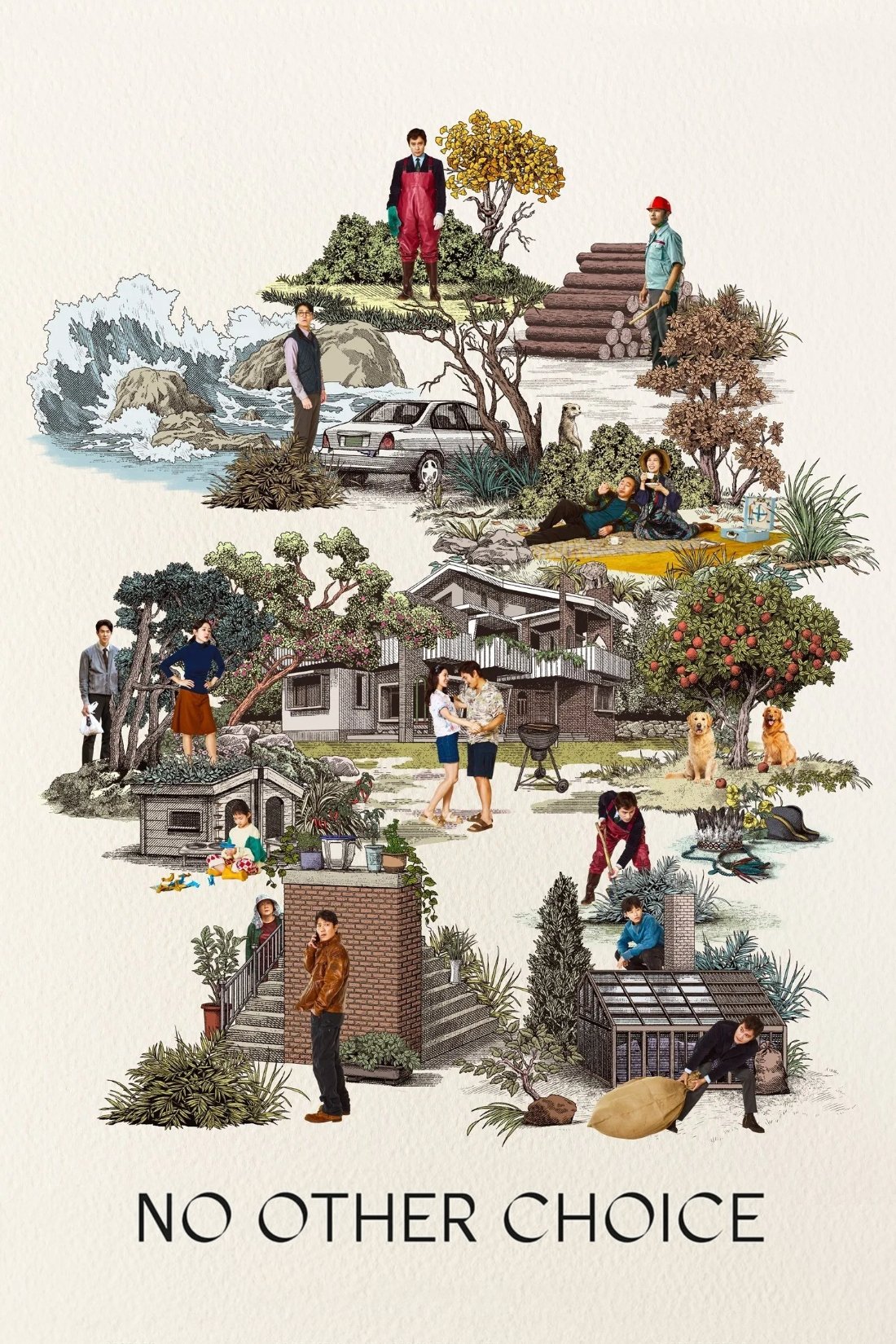
Some movies are easy to enjoy and just as easy to forget. Others stay with you because they hit close to home, reflecting something you have lived through or watched people around you experience. No Other Choice is very much the latter, and it stayed with me long after the credits rolled.
The main character is a proud pulp man named Man-su, who knows nothing but life inside the paper factory. After suddenly losing his job to a foreign buyout, he begins to feel the crushing pressures that come with more than a year without steady work: the guilt of his wife returning to the workforce, the fear of not being able to provide for his children’s future, and the panic that creeps in when he can no longer pay the mortgage on his childhood home. As someone who has also experienced unemployment, I found those feelings all too familiar. I sat in my seat with a growing sense of anxiety as Man-su rushed to interviews, worked meager temporary jobs and slowly began to unravel with each passing day.
Director Park Chan-wook captures that emotional free fall with chilling accuracy, grounding the story in something deeply real from the very beginning. The film then takes an unexpected turn, building tension slowly while mixing his signature dark humor with moments of discomfort. I found myself laughing one minute, only to be pulled to the edge of my seat the next as the tone shifted.
Seeing No Other Choice at The Independent Picture House adds another layer to the experience. This is the kind of film that feels richer when shared with a room full of people who recognize the same anxieties Man-su is feeling. You can feel it in the quiet moments, the nervous laughter and the tension thick enough to cut as the story unfolds. It is also the kind of movie that sparks long conversations once the credits roll.
For me, this is a timely, unsettling and deeply human film. If you are drawn to stories that challenge you while still feeling painfully recognizable, I cannot recommend seeing it on the big screen enough. Join us at IPH for a film that reflects a reality many people know all too well — and asks what happens when there truly is no other choice.