
By Trent Lakey
Director Jules Dassin (a Connecticut native, despite his name resembling the French) spent the latter half of the ‘40s producing many of the most influential pictures of the Film Noir genre. His police procedural The Naked City was one of the first Hollywood productions to shoot extensively on the streets of New York; Brute Force remains of one the greatest prison films, with Burt Lancaster in only his second film role; and Thieves’ Highway and Night and the City are pure noir, crime films with a social conscience. While many of his peers produced films of similar aesthetics and narratives, Dassin was a step above for his keen understanding of the societal implications beneath the stories he told and detailing the cruelties that follow a pursuit of power and wealth. But, his Hollywood career was cut short when he was named before the HUAC (House of Un-American Activities Committee) as a member of the Communist party, which he had joined in his youth before withdrawing in 1939. Regardless, he was exiled, prompting his sudden departure for France, where he made perhaps the most acclaimed heist film in the history of cinema, Rififi.
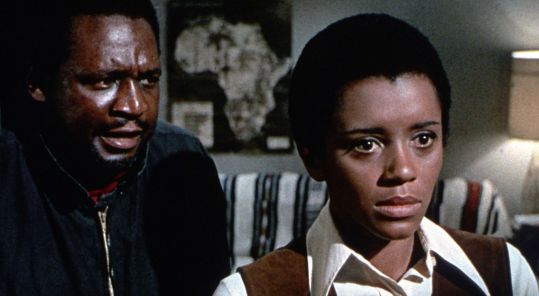
Yet, it was in the late ‘60s, after a string of films made in Europe and after the effects of his exile had simmered, that he returned to the US with the intention of adapting John Ford’s The Informer (itself an adaptation of a novel by Liam O’Flaherty, set against the backdrop of the Irish Civil War) and transposing it to the contemporary Black Power movement, set in Cleveland, Ohio, 1968. The story follows in the wake of Dr. Martin Luther King’s assassination in April of ‘68, as a group of Black militants prepare for a race war, but discover they have been betrayed to the police by one of their own. Tank (the informer, played by activist and subsequent novelist/educator, Julian Mayfield), an unemployed, bumbling alcoholic, has been ousted from the movement where his childhood friend Johnny (Max Julien) is a formidable leader. After Johnny steals a trove of rifles and ammunition, the police post a thousand dollar reward for information leading to his capture.
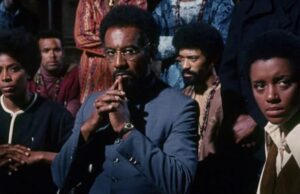
The film was nearly entirely shot before Dr. King’s murder, as it was soon released into theaters in December of 1968; Dassin decided to incorporate the assassination into the fabric of the narrative, as the film opens with television footage of King’s funeral procession in Atlanta, before settling in on the characters in Cleveland; it then serves as the catalyst for the story and the subsequent ideological turn to violence. As a film that already drew inspiration from real world people and events, it creates a visceral impression by further incorporation; what must’ve felt incredibly immediate upon release still feels emotionally charged by innumerable tragedies that could’ve been avoided.
But, the collaboration between Dassin and his fellow screenwriters Julian Mayfield and Ruby Dee (who also stars as Tank’s lover, Laurie), who were both lifelong activists and especially tuned in to the movement of the day, produce a prescient work of glaring vitality and startling complexity. The central betrayal is portrayed as a confoundingly detrimental act, performed by an individual without much to dissuade him in the direction of morality; he is stuck and without a tangible future, finding himself sinking effortlessly into unthinkable actions. It is these fractured figures at the heart of a movement that is quite compelling; perhaps, only after enough martyrs have been sacrificed and lionized, movements of enormous change will suddenly find themselves successful. Dassin shows these sacrifices as tender and bold, with abundant courage.