
By Travis Mullis
Watching Reds again reminds you that Warren Beatty has always possessed a brand of self-belief so radiant that even a solar flare might feel slightly underdressed beside it. Only Beatty could look at the upheaval of early twentieth century politics, which includes the Russian Revolution and the American labor movement, and decide that the most urgent requirement was a generous helping of Warren Beatty. The surprising part is that he was correct.
Most historical epics treat history like a painted backdrop behind which the hero can smolder. Beatty takes the more unusual approach of believing in the material. His John Reed is not simply a handsome radical who happens to have opinions. He is a man who can fall helplessly in love with a revolution while also losing himself in Diane Keaton, which is a level of multitasking rarely found in films that involve snow, ideology, and vigorous hat wearing.
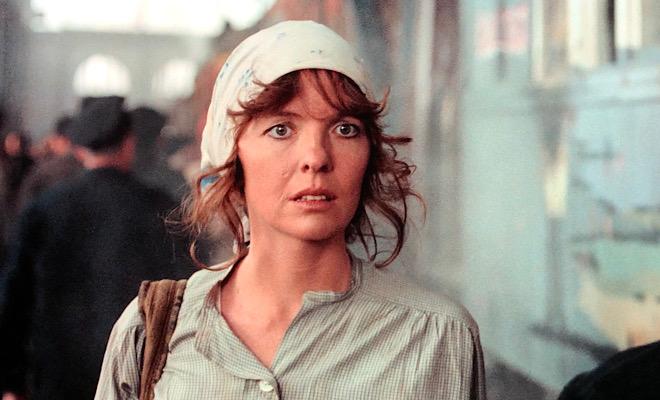
Diane Keaton’s Louise Bryant achieves the tricky feat of making independence look not only attractive but entirely reasonable. In many period dramas the female lead exists to remind the audience that running water was still a luxury. Keaton avoids this fate. She stands opposite Beatty with a bright alertness that suggests she is perfectly capable of resisting the forward march of history as well as the forward momentum of Beatty’s charm.
The film’s cleverest device arrives in the form of the real world “witnesses.” These elderly radicals and intellectuals describe Reed and Bryant with the fond irritation of people who lived through the events and still have the scars to prove it. Their presence gives the film the flavor of an oral history that has been illustrated by an art department with an unlimited budget. Imagine a Ken Burns documentary that has been given permission to smoke, drink, and offer dry asides. Their recollections remind us that revolutions are often narrated by people who survived by getting out of the way at exactly the right moment.
Visually the film has the appearance of a prestige postcard. Vittorio Storaro lights the story as if he were painting nostalgia directly onto the screen. The scenes set in Petrograd flicker with nervous revolutionary energy. The glow feels as if it is produced by a thousand candles that might gutter out at any second.
The central fascination of Reds rests in its balance between political sincerity and movie star vanity. Beatty wants to communicate the force of ideological upheaval. He also wants the audience to appreciate the sheer definition of his jawline while it trembles in the cold. Lesser films would allow these two ambitions to crash into each other. This one simply lets them coexist without comment, rather like rival theorists forced to sit next to one another at a dinner party where the soup has been served too hot for argument.
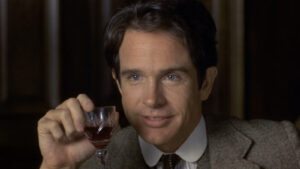
By the final act, as Reed’s fate tightens around him, the film reveals its true purpose. Reds becomes a rare American drama that treats politics not as a prop nor as a punchline but as something that deserves attention and even respect. Beatty gives Reed’s idealism a sincerity that would be regarded as a workplace hazard in modern Hollywood. The effect is strangely moving.
In the end the film justifies its length and its indulgence. It is ambitious, slightly self-admiring, and longer than polite company would normally permit. Yet democracy shares all these qualities. Beatty’s film believes in the importance of ideas. It also believes in the importance of Warren Beatty. For the duration of Reds the two beliefs merge into a single overwhelming conviction, and the miracle is that it works.